Complete Parameters of Centrifugal Glass Wool Products
Applicable Standards: GB/T 13350-2017 Glass Wool and Its Products for Thermal Insulation, GB/T 17795-2019 Glass Wool Thermal Insulating Products for Building
Material: Inorganic glass fiber produced by melting quartz sand and dolomite followed by centrifugal blowing, mixed with thermosetting binder; single-sided or double-sided aluminum foil composite available for vapor barrier, heat reflection and mechanical damage prevention
1. Standard Specifications of Four Main Product Types
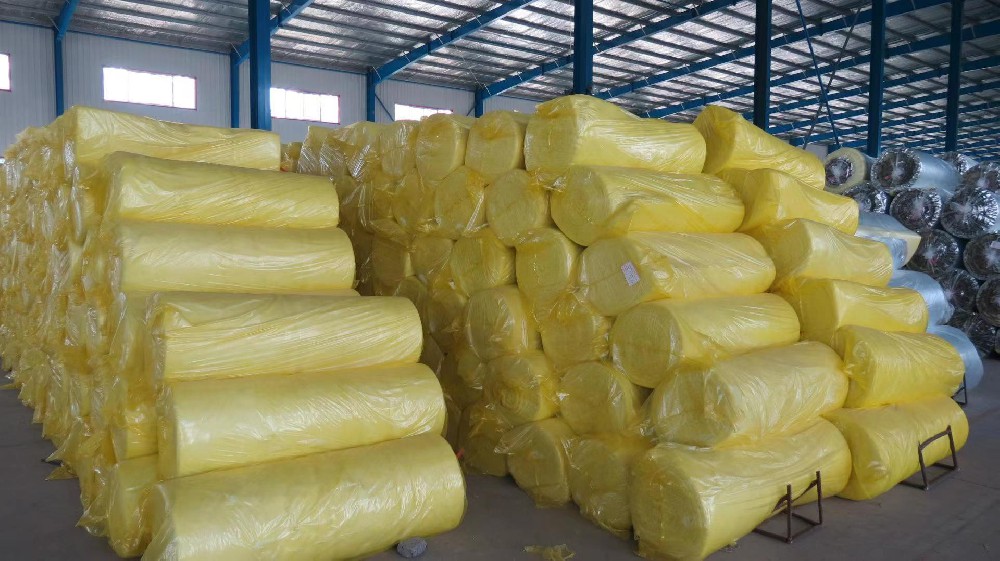
1. Glass Wool Blanket (for steel structure roofs, air ducts and large-area enclosures)
Density: 12, 16, 20, 24, 32, 48 kg/m³
Thickness: 25, 30, 40, 50, 75, 100, 120, 150 mm
Width: Standard 1200 mm; customizable 1000/1150/1500 mm
Length: 10m, 15m, 20m, 25m per roll, custom sizes available
Facing types: Bare glass wool, reinforced aluminum foil, embossed aluminum foil, fiberglass cloth facing
2. Glass Wool Board (for curtain walls, partition walls, anechoic chambers and outer insulation of air ducts)
Density: 24, 32, 48, 64, 80, 96 kg/m³
Thickness: 25~100mm
Standard sizes: 1200×600mm, 1200×1200mm, 1000×600mm
3. Glass Wool Pipe Section (thermal insulation for air conditioning and steam pipelines)
Matching steel pipe inner diameters: φ22, 27, 32, 43, 48, 57, 76, 89, 108, 114, 133, 159, 219, etc.
Wall thickness: 20, 25, 30, 40, 50mm
Length: 1000mm per piece
Density: 48~90 kg/m³
4. Glass Wool Strip (for sandwich panels and fireproof filling)
Density: 32~80kg/m³, size: 1200×150/200mm, thickness: 50–100mm
2. Core Thermal Performance (Mean Temperature: 70℃)
表格
| Parameter | Index | Unit | Remark |
|---|
| Thermal Conductivity λ | ≤0.042 (standard grade)Premium high-density grade ≤0.038 | W/(m·K) | Higher density brings lower thermal conductivity |
| Long-term Operating Temperature | Standard type: -50~300High-temperature type: -50~400 | ℃ | Upper limit determined by shrinkage temperature under load |
| Shrinkage Temperature Under Load | ≥250℃ (low density)≥350~400℃ (high density) | ℃ | No collapse or shrinkage under high temperature |
| Average Fiber Diameter | 5~8 | μm | Finer fibers offer better thermal insulation and sound absorption |
| Shot Content (particles over 0.25mm) | ≤5.0 | % | Premium products ≤0.3% |
3. Physical & Moisture Resistance Indicators
Moisture Content: ≤1.0%
Mass Moisture Absorption Rate: ≤5.0%
Hydrophobic Rate of hydrophobic grade: ≥98% (moisture and condensation resistance)
Chloride ion content: Low-chlorine version available to prevent corrosion of stainless steel pipelines
4. Combustion Performance (GB 8624-2012)
Substrate: Grade A1 non-combustible, smokeless, free of molten drips and non-flammable
Aluminum foil faced finished product: Classified A2-s1,d0
Comparison: Elastomeric foam is combustible Grade B1/B2; rock wool and Grade A1 glass wool are mainstream fireproof insulation materials
5. Acoustic Sound Absorption Parameters
Noise Reduction Coefficient (NRC): 0.60~0.90 (optimal for 48~64kg/m³ density and 50~100mm thickness)
Porous open fiber structure delivers excellent medium and high frequency sound absorption, widely used for machine rooms, air duct silencing and cinema partition walls
6. Additional Parameters of Aluminum Foil Clad Glass Wool
Aluminum foil types: Plain bright aluminum, grid embossed aluminum, reinforced mesh aluminum, PET laminated aluminum foil
Solar heat reflectivity ≥85% to block radiant heat
High water vapor diffusion resistance factor to cut off water vapor penetration and avoid internal dampness and condensation
Protects fibers from shedding and resists outdoor aging
7. Product Characteristics by Category
Standard glass wool: Cost-effective, universal for factories and ventilation ducts
Hydrophobic glass wool: For basements, humid machine rooms and outdoor pipelines
Formaldehyde-free glass wool: For indoor ceilings, hospitals, office buildings and environmental protection projects
High-density glass wool (80–120kg/m³): Superior sound insulation, for high-temperature equipment and air duct lining
8. Typical Applications
Thermal insulation for roof and wall of steel structure workshops, thermal insulation and noise reduction for central air conditioning ducts, curtain wall filling, machine room noise reduction, fireproof cladding for ventilation and smoke exhaust ducts, thermal insulation of cold and hot pipelines, anechoic chambers, sound insulation partition walls
 ch
ch English